Smart and Nice: The Leadership Equation

I have two criteria for hiring: Are you smart? Are you nice?
Gail McGovern, Chair, American Red Cross

I worked for Gail McGovern. She knows leadership. Gail’s been Executive Vice President at AT&T, President of Fidelity Personal Investments, and co-chair of the Johns Hopkins Board of Trustees. Trained as a mathematician, she understands the importance of intelligence, skill, and performance. But she also insists on something equally vital — being nice.

We’ve all heard the saying: Half of any job is getting the work done. The other half is how it gets done. That’s easy to say and hard to live.

Workplace pressures — deadlines, budgets, politics, difficult personalities — can make “being nice” challenging. And yet, kindness and respect are exactly what hold teams together when things get tough.

I’ve had to make painful leadership decisions: layoffs, reorganizations, service cuts, firings. None of that felt nice to those on the receiving end. One boss told me I was too nice, and another told me I needed to be tougher. Striking the right balance isn’t a formula; it’s an ongoing practice shaped by culture, timing, and circumstance.

Being nice isn’t about being sweet, or even about personality; it’s about behavior. It’s about how you:

  • Listen and communicate.

  • Disagree respectfully.

  • Support colleagues and staff.

  • Acknowledge mistakes.

  • Say “thank you” and “I’m sorry.”

In the end, effective leadership requires both head and heart — intelligence that drives results, and kindness that sustains relationships.

Leadership is about being smart and being nice.

Let’s discuss how you bring both to your leadership.

Year-End Appeals: My Client Got It Right

Year-End Appeals: My Client Got It Right

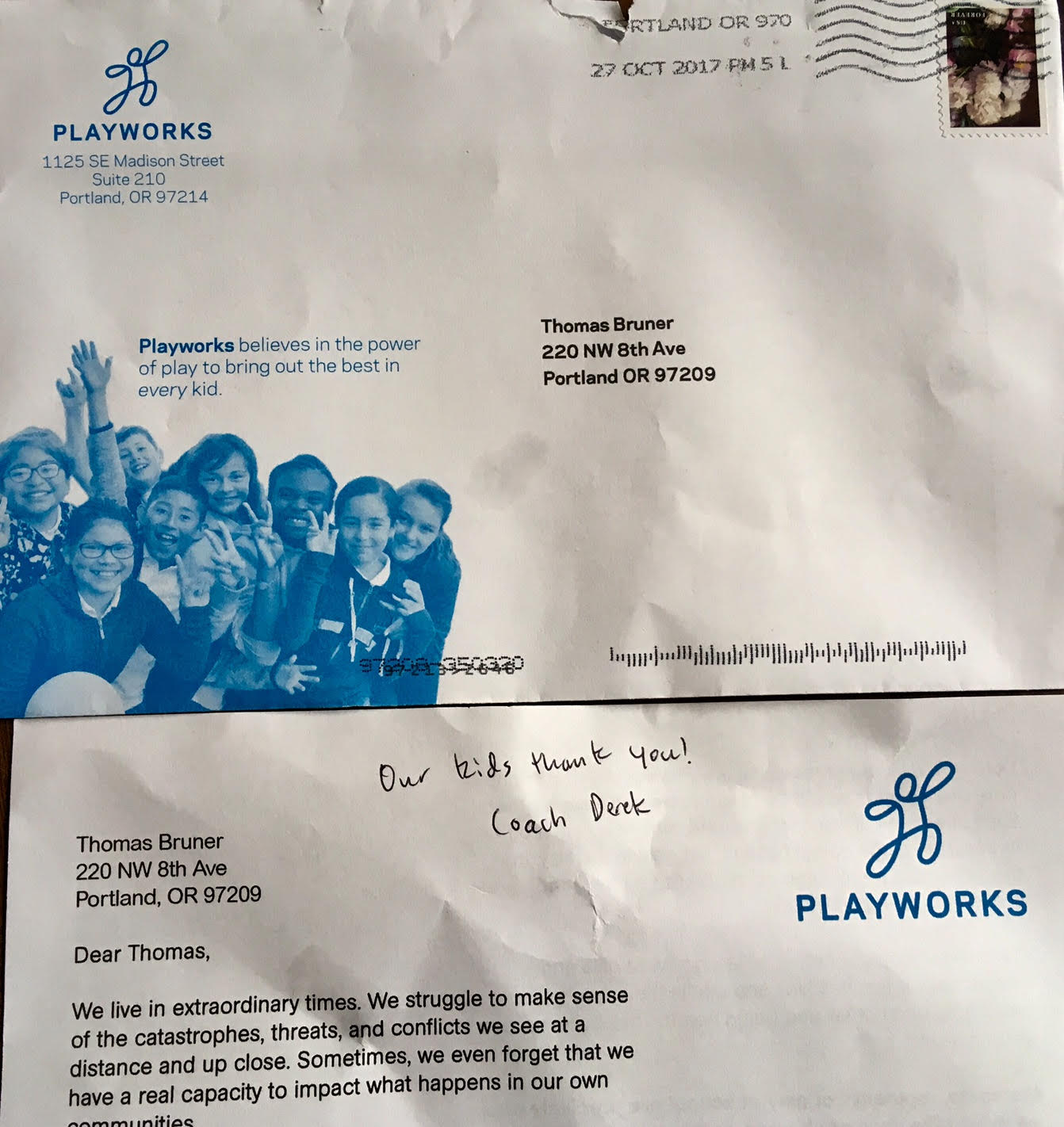
I received a year-end fundraising letter on October 30 from one of my clients, Playworks Pacific Northwest. While simple and produced on a budget, it stood out for following evidence-based practices for soliciting end-of-year gifts by mail.

Effective year-end mailings don’t have to be complicated or expensive. But they do need to be thoughtful and well-coordinated. Here are the simple but important things that Playworks got right.

  • Received before the holiday rush. They got on my year-end gift list early – October 30.
  • Name/address printed on the envelope (no mailing labels). Helps me feel less like one of thousands.
  • Bulk mail stamp (no pre-printed indicia). Looks less institutional and more personal.
  • Off-size envelope. 6″ x 9″ size helps it stand out from my other mail.
  • Use of color. Even one extra color makes it pop and harder to ignore.
  • Use of photos. Faces of students on every piece pulls me in and makes me smile.
  • Personalized greeting. “Dear Thomas” and not “Dear Friend” helps me feel more valued.
  • Compelling first sentence. “We live in extraordinary times.” Yes, we certainly do.
  • Hand-written note. “Our kids thank you! Coach Derek.” written across the top.
  • Hand-signed letter and note. “Geoff” followed by “Thanks!” written by the Executive Director.
  • Consistent design (envelope, letter, return envelope). Each piece reinforces the others.
  • Added their consultant (me) to the list. Smart of them to leave no new prospect behind.
  • Suggested a specific amount. $35 is hard to say no to, and gets me in the door as a new donor. 

Let’s discuss ways you can make your fundraising appeals even more effective.

Diversity: What Fails & What Works

Most diversity programs aren’t increasing diversity.

Why Diversity Programs Fail, Harvard Business Review.
July-August 2016.

An article in the most recent issue of the Harvard Business Review is generating lots of buzz in the diversity, equity and inclusion arena.

The authors analyzed three decades’ worth of data from more than 800 U.S. firms and interviewed hundreds of line managers and executives. Here’s what they found: the most commonly-used diversity programs did not increase representation of women and people of color in management after five years. In fact, they seemed to have the opposite effect by making matters worse. These are the strategies that didn’t work:

  • Mandatory diversity training. Managers resist strong-arming, effects of training are short-lived, and training can actually activate bias or provoke a backlash.
  • Hiring tests. Hiring managers don’t always test everyone, give some applicants a pass, and don’t interpret results consistently.
  • Performance ratings. Raters tend to lowball women and minorities. Some managers give everyone high marks to avoid hassles and keep their options open when giving promotions.
  • Grievance procedures. Many managers try to get even with or belittle employees who complain. Most employees don’t report discrimination, which creates a false impression that no problems exist.

The good news is, the authors found diversity strategies that did work. These programs centered on the principles of voluntarily engaging managers in solving the problem, increasing their on-the-job contact with female and minority workers, and promoting social accountability—the desire to look fair-minded. Here’s what worked:

  • Engagement.
    • Voluntary diversity training. When managers voluntarily help boost diversity in their companies, they begin to think of themselves as diversity champions.
    • College recruitment. Managers who voluntarily make college visits take their charge seriously, and are determined to come back with strong candidates from underrepresented groups.
    • Mentoring. Managers are eager to mentor assigned protégés, and women and minorities are often first to sign up for mentors.
  • Contact.
    • Self-managed teams. These allow people in different roles and functions to work together on projects as equals. Working side-by-side breaks down stereotypes, leading to more equitable hiring and promotion.
    • Cross-training. Rotating management trainees through departments exposes both department heads and trainees to a wider variety of people.
  • Social accountability.
    • Diversity task forces. Having a task force member in a department causes managers in it to ask themselves, “Will this look right?” when making hiring and promotion decisions.
    • Diversity managers. When people know they might have to explain their decisions, they are less likely to act on bias, which prompts managers to consider everyone who is qualified.


Let’s discuss how your business or organization can implement diversity strategies that really work.

Talk to your donors.

Don’t be one of those organizations that talks to me only when you want more money.”

– Paul Bruner, My Dad.

I had taken a CEO job in a business where my responsibilities would include raising money. Though I had already been fundraising for years, my Dad felt the need to admonish me against something he had experienced as a donor: the “thank-you…silence…please-give-more” phenomena.

Many of us have experienced this phenomena. We give a gift, receive a thank you, hear nothing for a long time, and then get asked to give more money.

Asking donors to give again is part of virtually every nonprofit organization’s job. But so is stewarding donors effectively. Asking for another gift should be a natural part of an ongoing conversation, rather than a shot-out-of-the-dark.

After you say thank you, and long before you ask again, what is your stewardship plan? What, how and when are you continuing to thank, inform, report back to, and engage donors in your work?

The good news is, stewardship and cultivation go hand-in-hand. The more you ensure that a donor understands their gift continues to be appreciated, is being well-managed, and is helping accomplish its stated goal, the more cultivated they become – and more likely to give again.

After the thank you, and before the next ask, keep talking to your donors.


Let’s discuss ways your business or organization can be better stewards of your donors.

“I made a mistake.”

We were naïve. I had to admit that I made a mistake.
I figured that was part of my job…
admit mistakes and move on quickly.”

Ryan Carson, CEO, Treehouse

Now this is a corporate Learning Culture in action.

In 2013, Portland online-education company Treehouse generated national buzz when it made the radical decision to eliminate managers and let employees self-manage. At the time, Treehouse won praise in some quarters for experimenting with a completely flat organization structure.

Treehouse wasn’t alone. San Francisco software project hosting company GitHub tried it. Las Vegas online clothing retailer Zappos is trying it.

It didn’t work. Last week, CEO Ryan Carson went public with the news with exceptional candor. He announced that a layer of management had been reinstituted.

Regardless of whether a flat organizational structure was a good decision to begin with, this is a great example of a corporation being a Learning Culture. Here’s why:

Innovated. Treehouse had a vision for the kind of company it wanted to be. It identified a way to operationalize its values. After examination, it tried something different for reasons it considered solid.

Admitted. “It didn’t work.” No dragging it out. No papering over the reality. No blaming others. No issuing a press release full of obfuscation. Just a straight-up admission from the top.

Pivoted. After giving its model time to work, and then some time trying to fix it, Treehouse reinstated a management structure quickly. It didn’t reintroduce management incrementally or hesitantly.

Shared. By going public, Treehouse provided an opportunity for the rest of us to reflect on and learn from their experiment. The company also garnered praise for its candor.


Let’s discuss ways your business or organization can be a Learning Culture by learning from mistakes.

Interrupting Racism

This woman changed my life.

Years ago I partnered with Dr. Joy DeGruy to help the organization I led improve its cultural competency. We had had a sometimes-tense relationship with communities of color. Many people in the Latino and African American communities did not trust us. And we as an organization felt misunderstood and unfairly blamed by them. Things needed to change.

Dr. DeGruy’s approach was not necessarily easy or comfortable for me and my staff. It was direct, candid, and unflinchingly honest. But that was its power. Her no-nonsense, practical style made a big and lasting impression on me and my work. I still implement the lessons she taught me.

This video has been around awhile. But it’s as relevant now as it was when it first came out. It illustrates the power of white allies to interrupt incidents of intentional or unintentional racism. Take a look.

Let’s discuss how your business or organization can be an ally in interrupting racism.

Learn Before You Leap.

This is a great example of an organization leading with the principles of a Learning Culture. And it’s a government agency.

My client, the Oregon Health Authority, recently had a longtime administrator retire. This manager had led a large, complex and visible department for more than 20 years. The department is very busy, and constantly juggles the needs and priorities of funders, contractors, community partners, constituents, advocates, policy makers and more. There’s a ton of work to be done all the time, so the pressure to fill the position quickly and be fully-staffed is real.

Rather than act reflexively and rush to fill the job as-is, my client made the decision to stop, take a step back, and ask the following questions:

1) Are the structure, role and expectations of this Manager position still current?

2) How might the department this Manager leads be more effective, current or relevant?

Even more impressive, my client didn’t just ask these questions of itself. It engaged a wide variety of external stakeholders in this assessment, too.

That’s a learning culture in action. Asking questions. Challenging assumptions. Reassessing. Willing to change. Always learning. And then moving forward.


Let’s discuss ways your business or organization can be a Learning Culture.

Take a Breath.

I have a nephew who is a passionate supporter of one candidate for President. I support another candidate for President. And I have a friend who supports yet another candidate for President.

I consider all three of us to be good, smart, thoughtful people. We’re also very different people. We see the world through lenses that have been shaped by our unique experiences.

As good, smart and thoughtful as we are, it’s amazing how quickly our interactions about current politics can spin up into borderline-high drama. Whenever that happens, I leave those interactions feeling uncomfortable. Not because I’m an apologist for my views, but because I see how I let my biases and emotions get the best of me.

Passion and conviction are great. Strong disagreement is fine. Casting aspersions on the worth and value of those with differing views is neither great nor fine.

As politics continue to swirl with great energy and heat in coming months, being mindful in tense moments can help us and others.

Stop.
Be quiet.
Be still.
Breathe.
Notice your body.
Observe your thoughts.
Allow the heat to cool.

And with the clarity that follows, then speak. Or maybe don’t speak. Give it a try.


Let’s discuss ways your business or organization can lead with mindfulness.

How Many Asks Today?

Preparation is essential to effective fundraising. And that takes time. Case statements. Prospect research. Project budgets, goals and outcomes. Marketing materials. Databases. Board training. And more.

That said, sometimes we spend more time talking about, thinking about, meeting about, and getting ready to raise money than in actually asking people for money.

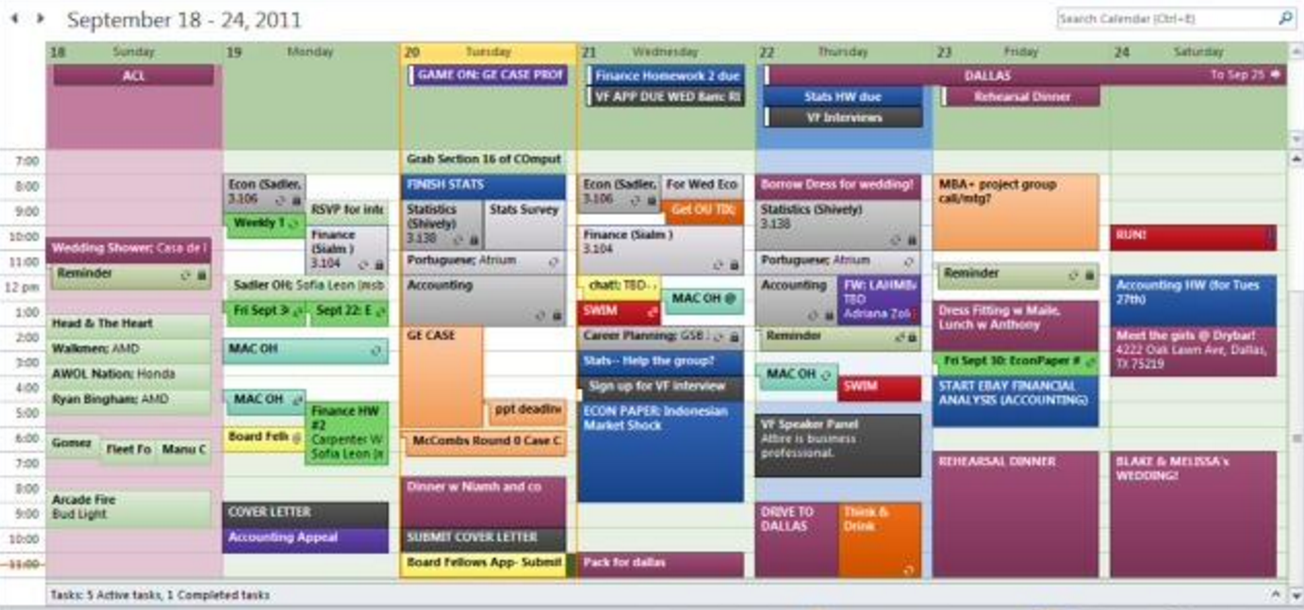
Take a look at your schedule for today. Or for tomorrow. Or for this week. Of all your meetings, appointments, work sessions and to-do tasks, how many of them are actual asks for money? It might be a personalized letter. It could be a phone call. Perhaps it’s a grant proposal. It might be a follow-up email. Or maybe it’s a face-to- face coffee.

Whatever the form of the ask, what percentage of your time today, tomorrow or this week is actually asking? And how does that compare with the amount of time you’re spending getting ready to ask? Watch your calendar over the coming days and weeks. Consider how you might increase the percentage of your time spent actually asking for money.

Let’s discus how your business or organization can spend more time asking for money.