Communicate Like Bridget

This is a critically important time to communicate with your supporters. But enough text-only emails. More videos like Bridget’s. More handwritten notes. More phone calls. 

I gave charitable gifts to ten organizations last year. In the month since Covid_19 has upended our lives, I’ve received updates from most of them by text-only email.

Bridget is executive director of an organization serving homeless youth. She founded the agency 15 years ago and is well-known to its volunteers, donors and partners. Bridget recently posted a video to supporters on YouTube. As a donor, I found her message powerful. Here are six reasons why:

It’s simple.  Her organization spent none of its limited money and time on a highly-produced video. She made notes, put her kids in the next room, turned on her camera, and spoke.

It’s authentic.  If you know Bridget, this is her – kind, thoughtful, committed and self-effacing. There’s no false bravado here, just a face and voice in an inbox flooded with text.

It’s personal.  She starts by telling us about her family, and empathizing with all of us lucky enough to be working from home with loved ones.

It’s informative.  Bridget gives us a practical update about her staff’s current work serving homeless youth, and their plans to continue helping youth even if things get worse.

It’s short.  Her message is just three minutes – long enough to be informative, and brief enough to keep me watching. 

It’s inspiring.  She asks for money, but only after I’ve seen her genuine caring, heard about the courage and commitment of her staff, and been reminded of the resilience of youth.  

This is a critically important time to communicate with your supporters. But enough text-only emails. More videos like Bridget’s. More handwritten notes. And more phone calls. 

What are your thoughts about communicating with your supporters during this time? 

Year-End Appeals: My Client Got It Right

Year-End Appeals: My Client Got It Right

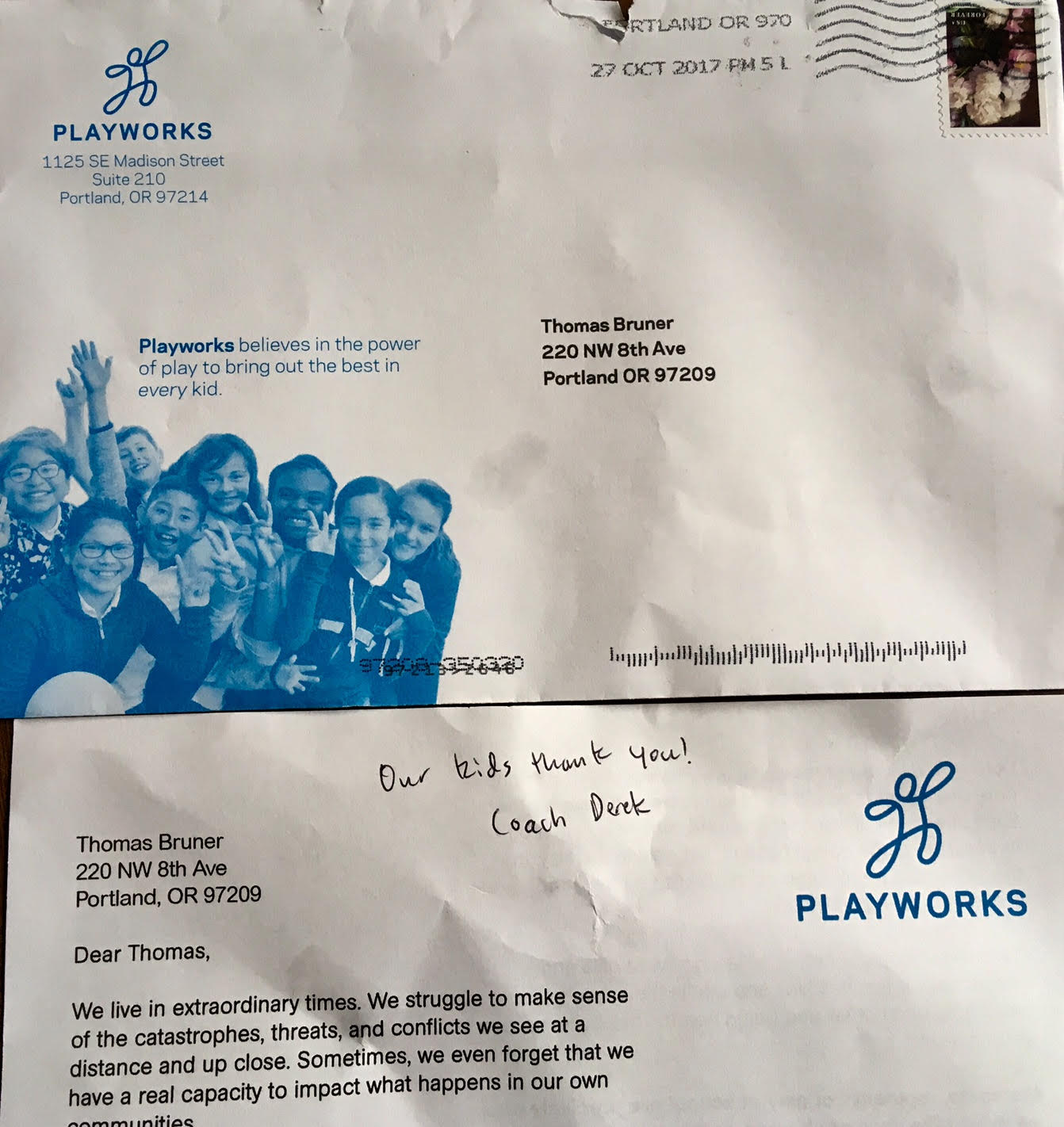
I received a year-end fundraising letter on October 30 from one of my clients, Playworks Pacific Northwest. While simple and produced on a budget, it stood out for following evidence-based practices for soliciting end-of-year gifts by mail.

Effective year-end mailings don’t have to be complicated or expensive. But they do need to be thoughtful and well-coordinated. Here are the simple but important things that Playworks got right.

  • Received before the holiday rush. They got on my year-end gift list early – October 30.
  • Name/address printed on the envelope (no mailing labels). Helps me feel less like one of thousands.
  • Bulk mail stamp (no pre-printed indicia). Looks less institutional and more personal.
  • Off-size envelope. 6″ x 9″ size helps it stand out from my other mail.
  • Use of color. Even one extra color makes it pop and harder to ignore.
  • Use of photos. Faces of students on every piece pulls me in and makes me smile.
  • Personalized greeting. “Dear Thomas” and not “Dear Friend” helps me feel more valued.
  • Compelling first sentence. “We live in extraordinary times.” Yes, we certainly do.
  • Hand-written note. “Our kids thank you! Coach Derek.” written across the top.
  • Hand-signed letter and note. “Geoff” followed by “Thanks!” written by the Executive Director.
  • Consistent design (envelope, letter, return envelope). Each piece reinforces the others.
  • Added their consultant (me) to the list. Smart of them to leave no new prospect behind.
  • Suggested a specific amount. $35 is hard to say no to, and gets me in the door as a new donor. 

Let’s discuss ways you can make your fundraising appeals even more effective.

Talk to your donors.

Don’t be one of those organizations that talks to me only when you want more money.”

– Paul Bruner, My Dad.

I had taken a CEO job in a business where my responsibilities would include raising money. Though I had already been fundraising for years, my Dad felt the need to admonish me against something he had experienced as a donor: the “thank-you…silence…please-give-more” phenomena.

Many of us have experienced this phenomena. We give a gift, receive a thank you, hear nothing for a long time, and then get asked to give more money.

Asking donors to give again is part of virtually every nonprofit organization’s job. But so is stewarding donors effectively. Asking for another gift should be a natural part of an ongoing conversation, rather than a shot-out-of-the-dark.

After you say thank you, and long before you ask again, what is your stewardship plan? What, how and when are you continuing to thank, inform, report back to, and engage donors in your work?

The good news is, stewardship and cultivation go hand-in-hand. The more you ensure that a donor understands their gift continues to be appreciated, is being well-managed, and is helping accomplish its stated goal, the more cultivated they become – and more likely to give again.

After the thank you, and before the next ask, keep talking to your donors.


Let’s discuss ways your business or organization can be better stewards of your donors.

How Many Asks Today?

Preparation is essential to effective fundraising. And that takes time. Case statements. Prospect research. Project budgets, goals and outcomes. Marketing materials. Databases. Board training. And more.

That said, sometimes we spend more time talking about, thinking about, meeting about, and getting ready to raise money than in actually asking people for money.

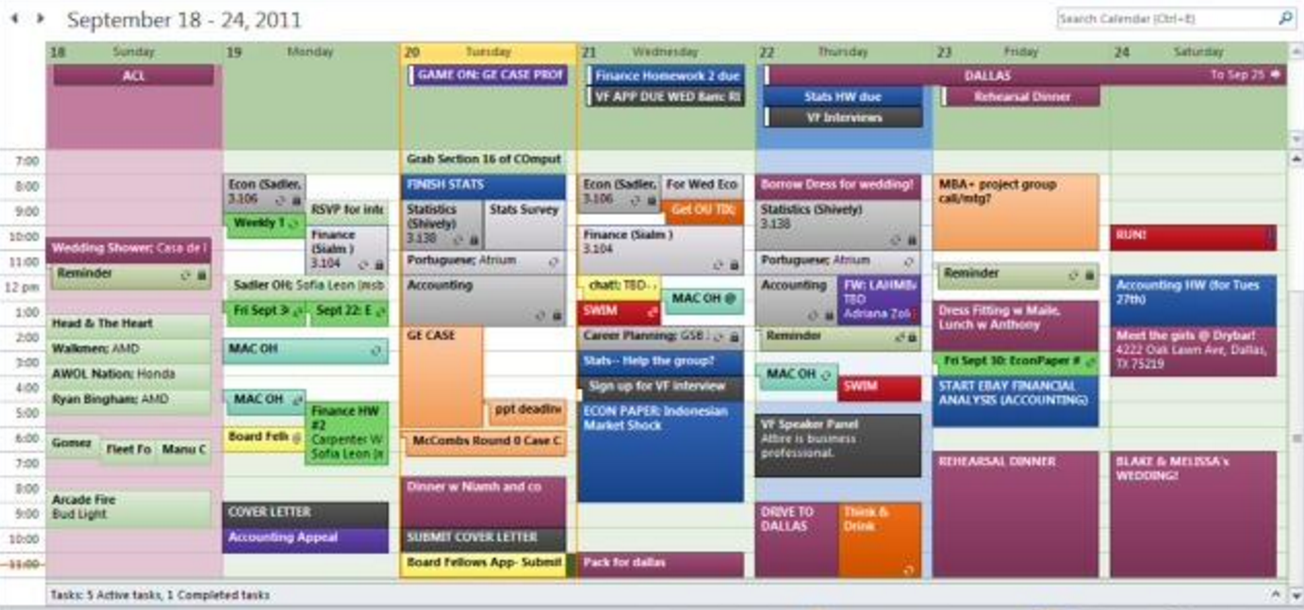
Take a look at your schedule for today. Or for tomorrow. Or for this week. Of all your meetings, appointments, work sessions and to-do tasks, how many of them are actual asks for money? It might be a personalized letter. It could be a phone call. Perhaps it’s a grant proposal. It might be a follow-up email. Or maybe it’s a face-to- face coffee.

Whatever the form of the ask, what percentage of your time today, tomorrow or this week is actually asking? And how does that compare with the amount of time you’re spending getting ready to ask? Watch your calendar over the coming days and weeks. Consider how you might increase the percentage of your time spent actually asking for money.

Let’s discus how your business or organization can spend more time asking for money.